
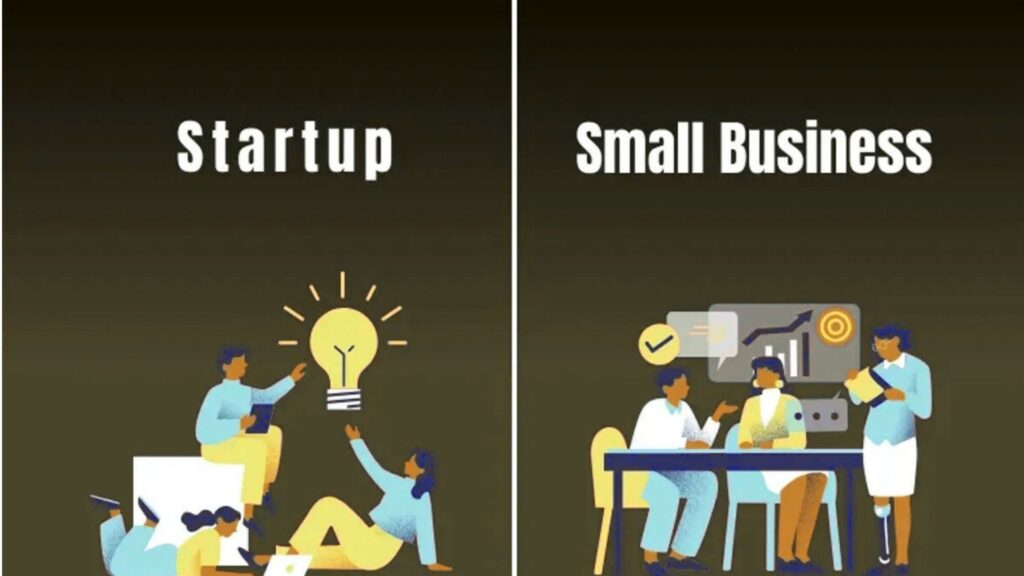
The terms startup, small business, and enterprise are often used interchangeably, but they represent very different types of organizations. Each has its own goals, structure, size, and approach to growth. Understanding these differences is important for entrepreneurs, investors, employees, and anyone interested in how businesses operate.
In this article, we clearly explain the difference between a startup, a small business, and an enterprise in simple terms, so you can easily understand how they work and why the distinction matters.
Why Understanding These Business Types Matters
Knowing the difference helps people:
- Choose the right career path
- Decide where to invest
- Plan business growth correctly
- Set realistic expectations
Each business type operates with a different mindset and strategy.
What Is a Startup?
A startup is a young company created to solve a problem with an innovative product or service. Startups are designed to grow quickly and scale to large markets.
Key characteristics of startups:
- Focus on innovation
- High growth potential
- Scalable business model
- Often use technology
- Willing to take risks
Startups aim to grow fast, not stay small.
Goals of a Startup
Startups aim for rapid growth.
Common startup goals:
- Disrupt an existing market
- Build a scalable product
- Attract investors
- Expand globally
Profit may not be the first priority—growth is.
What Is a Small Business?
A small business is a company that serves a local or specific market and focuses on steady, long-term income rather than rapid expansion.
Key characteristics of small businesses:
- Limited number of employees
- Operates locally or regionally
- Stable and predictable income
- Owner-managed
Small businesses prioritize sustainability over rapid growth.
Goals of a Small Business
Small businesses focus on stability.
Common goals include:
- Consistent profits
- Long-term survival
- Serving local customers
- Personal financial independence
Growth is often gradual and controlled.
What Is an Enterprise?
An enterprise is a large, established organization that operates at a national or global scale. Enterprises often have complex structures and large workforces.
Key characteristics of enterprises:
- Large number of employees
- Global or national presence
- Multiple departments
- Formal management structure
Enterprises focus on efficiency, scale, and market leadership.
Goals of an Enterprise
Enterprises aim to maintain dominance.
Common enterprise goals:
- Market expansion
- Operational efficiency
- Long-term profitability
- Shareholder value
Innovation exists, but stability is critical.
Key Differences at a Glance
Startup
- High risk, high reward
- Rapid growth focus
- Innovation-driven
- Flexible structure
Small Business
- Low to moderate risk
- Steady income focus
- Local or niche market
- Simple structure
Enterprise
- Lower risk, large scale
- Market leadership focus
- Global operations
- Complex structure
Each serves a different purpose in the economy.
Difference in Business Size and Scale
Size plays a major role.
Startups:
- Small teams
- Early-stage operations
Small businesses:
- Few to dozens of employees
- Limited geographic reach
Enterprises:
- Thousands of employees
- Global presence
Scale increases with maturity.
Difference in Growth Strategy
Growth strategies vary widely.
Startups:
- Aim for fast scaling
- Seek investors
- Expand aggressively
Small businesses:
- Grow slowly
- Reinvest profits
- Focus on loyal customers
Enterprises:
- Expand through mergers
- Enter new markets carefully
- Optimize operations
Difference in Funding Sources
Funding defines flexibility.
Startups:
- Venture capital
- Angel investors
- Accelerators
Small businesses:
- Personal savings
- Bank loans
- Revenue-based growth
Enterprises:
- Stock markets
- Large investments
- Corporate financing
Each has different financial pressure.
Difference in Risk Level
Risk tolerance differs.
Startups:
- High risk
- Many fail early
Small businesses:
- Moderate risk
- More predictable
Enterprises:
- Lower risk
- Diversified operations
Risk decreases as size increases.
Difference in Innovation
Innovation plays different roles.
Startups:
- Core focus
- Disruptive ideas
Small businesses:
- Incremental improvements
- Service quality focus
Enterprises:
- Structured innovation
- R&D departments
Innovation exists at all levels but differs in pace.
Difference in Management Structure
Structure evolves with size.
Startups:
- Flat hierarchy
- Founders involved daily
Small businesses:
- Owner-led
- Simple management
Enterprises:
- Multiple management layers
- Specialized departments
Structure supports scale.
Difference in Customer Focus
Customer approach changes.
Startups:
- Early adopters
- Testing and feedback
Small businesses:
- Long-term relationships
- Local loyalty
Enterprises:
- Mass markets
- Brand-driven trust
Each focuses on different customer needs.
Difference in Decision-Making Speed
Speed varies by size.
Startups:
- Fast decisions
- Flexible changes
Small businesses:
- Moderately fast
- Owner-driven
Enterprises:
- Slower decisions
- Formal approval processes
Speed decreases with complexity.
Difference in Work Culture
Culture reflects goals.
Startups:
- Fast-paced
- High pressure
- Innovative
Small businesses:
- Personal
- Community-focused
Enterprises:
- Structured
- Process-driven
Culture shapes daily work life.
Can a Startup Become an Enterprise?
Yes, many enterprises started as startups.
Growth path:
Startup → Small business → Enterprise
Growth requires:
- Strong strategy
- Market demand
- Adaptability
Not all businesses want or need to scale this far.
Which Business Type Is Right for You?
It depends on your goals.
Choose a startup if you:
- Enjoy risk
- Want fast growth
- Like innovation
Choose a small business if you:
- Want stability
- Prefer independence
- Value local impact
Choose an enterprise if you:
- Like structure
- Want scale
- Prefer established systems
Each path has value.
Business Models, Growth, and Strategic Insight
Understanding business types helps with smarter decisions and planning. Platforms like
pmu malin promote business awareness, entrepreneurial insight, and practical understanding of how different organizations operate-qualities that align closely with learning the difference between startups, small businesses, and enterprises.
Final Thoughts
The difference between a startup, a small business, and an enterprise lies in goals, growth strategy, scale, and mindset. Startups chase rapid growth and innovation, small businesses focus on stability and local impact, and enterprises operate at large scale with structured systems.
None is better than the others-they simply serve different purposes. Understanding these differences helps entrepreneurs build smarter plans, employees choose the right environment, and investors make informed decisions.
In business, success is not about size alone-it is about choosing the model that fits your vision and goals.