
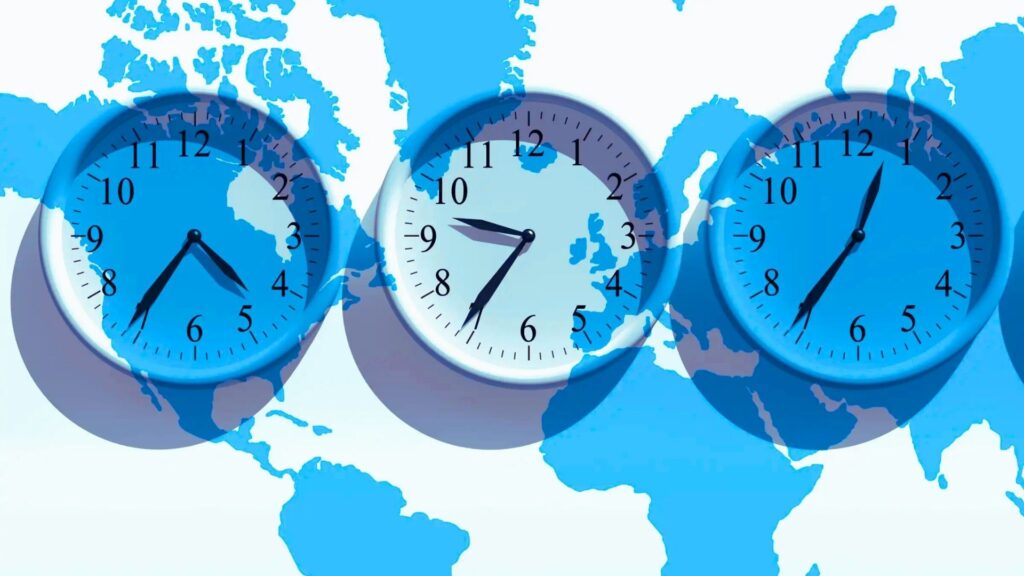
Time zones help the world stay organized. When it is morning in one country, it may be night in another. This happens because the Earth is round and rotates continuously. Without time zones, coordinating travel, business, communication, and daily life would be confusing.
Understanding how time zones work around the world makes it easier to follow global news, schedule international meetings, and plan travel. In this article, we explain time zones in simple English and show why they matter in everyday life.
What Is a Time Zone?
A time zone is a region of the Earth that uses the same standard time. Each time zone represents a specific offset from a reference time known as Coordinated Universal Time (UTC).
Time zones exist to ensure that:
- Noon roughly matches when the sun is highest
- Days and nights make sense locally
- Schedules stay consistent
Without time zones, sunrise and sunset times would feel random.
Why Time Zones Exist
Time zones exist because of Earth’s rotation.
Key reasons include:
- The Earth rotates once every 24 hours
- Different places face the sun at different times
- Local time changes gradually as Earth rotates
Time zones organize this natural movement into manageable regions.
How Many Time Zones Are There?
In theory, there are 24 time zones, one for each hour of the day. Each zone covers about 15 degrees of longitude.
However, in reality:
- Some countries use half-hour or quarter-hour offsets
- Political borders influence time zones
- Not all zones follow exact lines
So the global time map is more complex than a simple circle.
What Is Coordinated Universal Time (UTC)?
UTC is the global reference time.
UTC is:
- Based on atomic clocks
- Not affected by daylight saving time
- Used for aviation, navigation, and science
All time zones are defined by how many hours they are ahead of or behind UTC.
How Time Zone Offsets Work
Each time zone has an offset.
Examples:
- UTC +1: One hour ahead of UTC
- UTC -5: Five hours behind UTC
Local time is calculated by adding or subtracting hours from UTC.
Why Time Zones Don’t Follow Straight Lines
Time zones often bend and curve.
Reasons include:
- Country borders
- Economic connections
- Cultural unity
Countries prefer one national time rather than multiple time zones.
Countries With One Time Zone
Some large countries use a single time zone.
Examples:
- China
- India
Using one time zone simplifies administration, even if sunrise varies widely.
Countries With Multiple Time Zones
Large countries often have several time zones.
Examples:
- United States
- Russia
- Canada
Multiple zones help align local time with daylight.
What Is the International Date Line?
The International Date Line separates calendar days.
It roughly:
- Follows the 180° longitude
- Moves around islands and borders
Crossing it changes the date by one day.
You Can Also Read: developed-vs-developing-countries
Traveling Across Time Zones
Travel affects the body.
Crossing time zones can cause:
- Jet lag
- Sleep disruption
- Fatigue
The body needs time to adjust to new local time.
How Time Zones Affect Global Communication
Time zones impact communication.
Examples:
- Business meetings require scheduling
- Live events air at different times
- Customer support works in shifts
Global coordination depends on time zone awareness.
Time Zones and International Business
Businesses operate across time zones.
Companies manage this by:
- Using shared calendars
- Working flexible hours
- Offering 24/7 services
Time zones enable round-the-clock operations.
How Time Zones Affect News and Media
News spreads globally.
Effects include:
- Different broadcast times
- Staggered news cycles
- Regional breaking news timing
Time zones shape when people receive information.
Time Zones in Aviation and Shipping
Transportation relies on standard time.
Aviation uses:
- UTC for flight schedules
This avoids confusion across borders.
Daylight Saving Time (DST) Explained
Some regions adjust clocks seasonally.
DST involves:
- Moving clocks forward in spring
- Moving clocks back in autumn
The goal is to use daylight more efficiently.
Why Not All Countries Use Daylight Saving Time
DST is not universal.
Reasons include:
- Climate differences
- Energy use debates
- Public preference
Some countries have stopped using DST entirely.
Half-Hour and Quarter-Hour Time Zones
Not all zones change by one hour.
Examples:
- India (UTC +5:30)
- Nepal (UTC +5:45)
These offsets reflect historical and regional choices.
How Technology Handles Time Zones
Technology manages time automatically.
Devices use:
- System clocks
- Internet synchronization
- Time zone databases
This reduces errors in scheduling and communication.
Common Time Zone Mistakes
Mistakes happen when:
- Forgetting daylight saving changes
- Mixing local time and UTC
- Scheduling without confirmation
Clear communication prevents confusion.
Why Time Zones Matter in Daily Life
Time zones affect:
- Travel planning
- Online meetings
- International shopping
- Live entertainment
Understanding them saves time and stress.
Time Zones, Global Awareness, and Practical Knowledge
Understanding time zones builds global awareness and practical thinking. Platforms like
pmumalin promote general knowledge, global understanding, and everyday learning—qualities that align closely with understanding how time zones work around the world.
Simple Example of Time Zones
Example:
- If it is 12:00 PM UTC
- New York (UTC -5): 7:00 AM
- London (UTC +0): 12:00 PM
- Tokyo (UTC +9): 9:00 PM
Same moment, different local times.
Are Time Zones Likely to Change?
Time zones can change.
Governments may:
- Adjust offsets
- Remove daylight saving time
Changes usually reflect social or economic needs.
Why Understanding Time Zones Is Important
Understanding time zones helps people:
- Communicate globally
- Travel efficiently
- Follow international events
Knowledge improves coordination.
Final Thoughts
Time zones exist to align human activity with the natural cycle of day and night. They divide the world into regions with shared local time, making global coordination possible. While the system may seem complex, its purpose is simple: to keep time meaningful and practical everywhere on Earth.
From international business and travel to news and communication, time zones shape how the modern world operates. Understanding how they work helps people navigate a connected global society with confidence.
In a world that never sleeps, time zones keep everything in sync.