
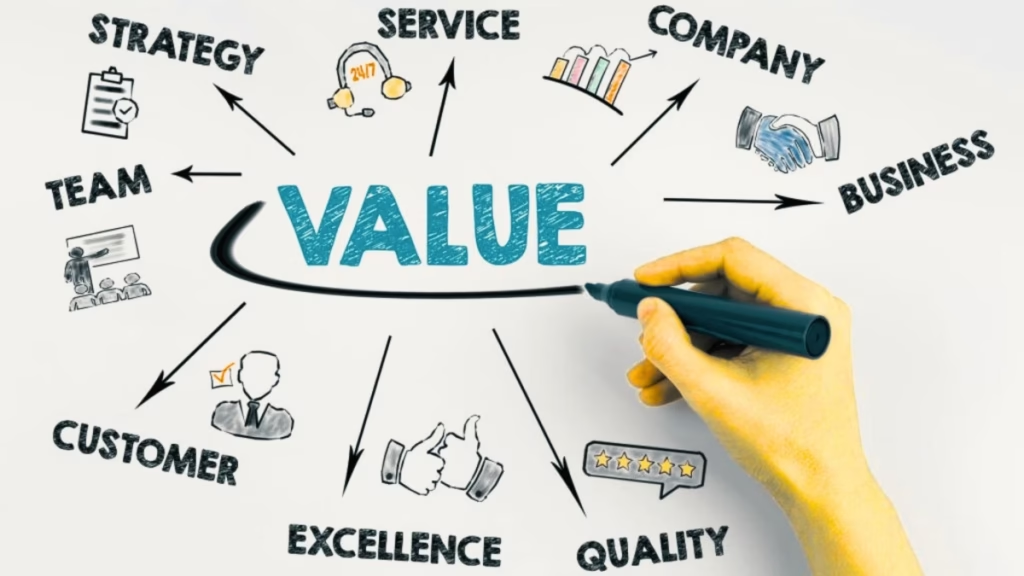
Company valuation is the process of estimating how much a business is worth. Investors, business owners, startups, and even employees often hear about company valuation, but many people find it confusing. In reality, valuation is based on clear principles that anyone can understand.
Understanding how company valuation works helps people make better decisions about investing, selling a business, raising funds, or planning growth. In this article, we explain company valuation in simple English and walk through the most common methods used today.
What Is Company Valuation?
Company valuation is the process of determining the financial value of a business. This value represents what someone might reasonably pay to buy the company or invest in it.
Valuation is used for:
- Selling a business
- Raising investment
- Mergers and acquisitions
- Stock pricing
- Business planning
There is no single “correct” value—valuation is an estimate based on data and assumptions.
Why Company Valuation Is Important
Valuation affects many decisions.
It helps:
- Owners understand business worth
- Investors assess risk and reward
- Startups negotiate funding
- Buyers avoid overpaying
A fair valuation creates trust between all parties.
What Determines a Company’s Value?
Several factors influence valuation.
Key factors include:
- Revenue and profits
- Growth rate
- Market size
- Assets and liabilities
- Brand strength
- Competition
- Risk level
Strong performance usually leads to higher valuation.
1. Revenue-Based Valuation
This is one of the simplest methods.
How it works:
The company’s value is estimated by multiplying its annual revenue by a specific number (called a multiple).
Example:
If a company earns $1 million per year and the market multiple is 3, the valuation is:
$1 million × 3 = $3 million
This method is common for startups and fast-growing companies.
2. Profit-Based Valuation
Profits matter more than revenue for mature businesses.
How it works:
Valuation is based on net profit multiplied by a profit multiple.
Example:
If a company earns $200,000 profit and the multiple is 5:
$200,000 × 5 = $1 million
Investors prefer profitable companies because they are less risky.
3. Asset-Based Valuation
This method focuses on what the company owns.
How it works:
Total assets minus liabilities equals company value.
Assets may include:
- Cash
- Property
- Equipment
- Inventory
This method works well for asset-heavy businesses.
4. Market Comparison Method
This method compares similar companies.
How it works:
The company is compared to similar businesses that were sold or are publicly traded.
Example:
If similar companies sell for 4× revenue, the same multiple may apply.
This method reflects real market behavior.
You Can Also Read: startup small business enterprise difference
5. Discounted Cash Flow (DCF) Method
DCF focuses on future earnings.
How it works:
- Estimate future cash flows
- Adjust for risk
- Convert future value into today’s value
DCF is detailed and commonly used by professional investors.
6. Startup Valuation: Why It’s Different
Startups often lack profits.
Startup valuation depends on:
- Idea strength
- Market potential
- Growth speed
- Team quality
Valuation is more about future potential than current income.
7. Valuation Multiples Explained Simply
Multiples are shortcuts.
Common multiples include:
- Revenue multiple
- Profit multiple
- EBITDA multiple
Higher growth and lower risk usually mean higher multiples.
8 How Growth Rate Affects Valuation
Growth increases value.
Fast-growing companies:
- Attract more investors
- Command higher multiples
Slow growth often leads to lower valuation.
9. How Risk Impacts Valuation
Risk lowers value.
High risk includes:
- Unstable income
- Strong competition
- Market uncertainty
Lower risk companies are valued higher.
10. Role of Industry in Valuation
Industry matters a lot.
Examples:
- Tech companies often have high valuations
- Traditional businesses have lower multiples
Industry trends influence investor expectations.
11. How Brand and Reputation Add Value
Brand is an invisible asset.
Strong brands:
- Attract loyal customers
- Charge higher prices
- Reduce marketing costs
This increases valuation even without higher profits.
12. Valuation for Small Businesses
Small businesses are valued more conservatively.
Factors include:
- Owner dependency
- Local market size
- Stable cash flow
Predictability is key.
13. Valuation for Public Companies
Public companies are valued daily.
Stock price × number of shares = market value
This reflects investor confidence in real time.
14. Common Valuation Mistakes
Mistakes can distort value.
Common errors include:
- Overestimating growth
- Ignoring risk
- Using wrong comparisons
Realistic assumptions matter.
15. Valuation Is Both Art and Science
Valuation is not exact.
It combines:
- Financial data
- Market behavior
- Human judgment
Different methods may produce different values.
Company Valuation, Business Insight, and Financial Awareness
Understanding valuation builds stronger business decisions and financial awareness. Platforms like
pmu malin promote business insight, financial understanding, and entrepreneurial education—qualities that align closely with learning how company valuation works in simple terms.
Who Uses Company Valuation?
Valuation is used by:
- Investors
- Entrepreneurs
- Banks
- Corporations
- Governments
It supports informed decision-making.
How Often Should a Company Be Valued?
Valuation changes over time.
Updates are needed when:
- Revenue changes
- Market conditions shift
- New investments occur
Regular valuation keeps strategy aligned.
Can Valuation Change Quickly?
Yes.
Valuation can change due to:
- Market trends
- Economic news
- Company performance
Business value is dynamic.
Final Thoughts
Company valuation is the process of estimating what a business is worth based on income, growth, assets, risk, and market conditions. While it may seem complex, the basic idea is simple: a company is valued based on what it earns today and what it can earn in the future.
There is no single perfect valuation method. Different situations require different approaches. Understanding the basics helps business owners, investors, and learners make smarter decisions.
In business, knowing your value is not about guessing—it is about understanding the numbers, the market, and the potential ahead.