
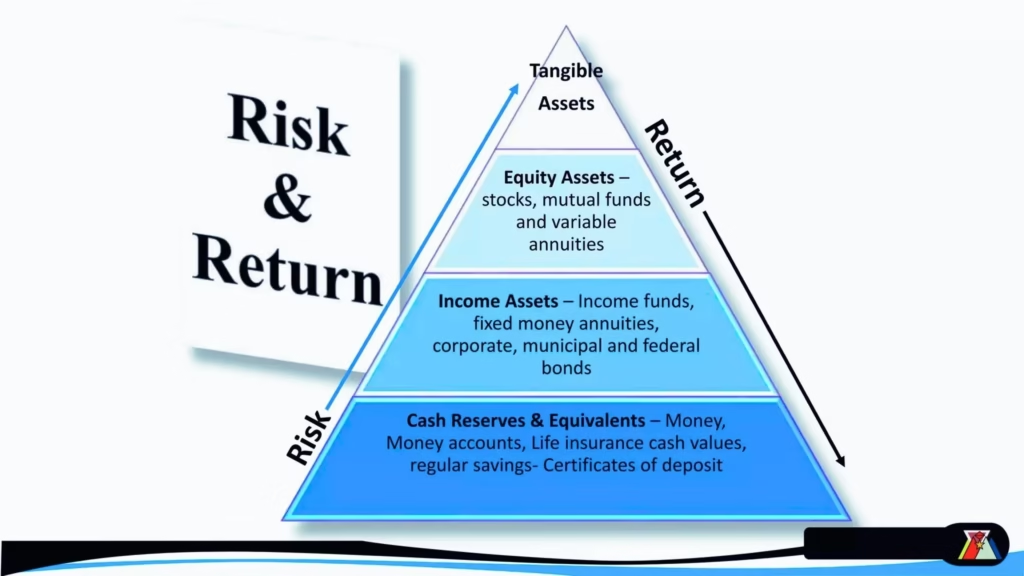
Risk and return are two of the most important ideas in finance. Anytime money is saved, invested, or spent, these two concepts play a role. People often want high returns, but higher returns usually come with higher risk. Understanding this balance helps individuals and businesses make smarter financial decisions.
In this article, we explain the basics of risk and return in finance using simple language, practical examples, and everyday situations.
What Is Risk in Finance?
Risk is the chance that the actual outcome of a financial decision will be different from what you expect. This difference can mean earning less money than planned or even losing money.
Risk exists because:
- The future is uncertain
- Markets change
- Economic conditions shift
Any financial decision that involves uncertainty includes risk.
What Is Return in Finance?
Return is the money you gain or lose from an investment or financial decision. It is often expressed as a percentage.
Return can come from:
- Interest earned
- Dividends
- Price increases
- Business profits
Higher returns are attractive, but they are never guaranteed.
Why Risk and Return Are Connected
Risk and return are directly linked.
The basic rule:
Higher potential return = Higher risk
Low-risk options usually offer lower returns, while higher-risk options offer the chance of higher rewards.
Low-Risk Financial Options
Low-risk options focus on safety.
Examples include:
- Savings accounts
- Fixed deposits
- Government bonds
These options protect money but usually offer modest returns.
Medium-Risk Financial Options
Medium-risk options balance safety and growth.
Examples include:
- Mutual funds
- Index funds
- High-quality corporate bonds
These options are suitable for long-term goals.
High-Risk Financial Options
High-risk options aim for higher returns.
Examples include:
- Stocks
- Cryptocurrencies
- Trading activities
Returns can be high, but losses are also possible.
Types of Financial Risk
Risk comes in many forms.
Common types include:
- Market risk – price fluctuations
- Inflation risk – loss of purchasing power
- Credit risk – borrower fails to repay
- Liquidity risk – difficulty selling assets
- Interest rate risk – rate changes affecting value
Understanding risk types helps manage them better.
You Can Also Read: what-is-inflation-daily-life-impact
How Time Affects Risk and Return
Time plays a key role.
Short-term:
- Higher uncertainty
- More price fluctuations
Long-term:
- Risk tends to reduce
- Returns become more predictable
Longer time horizons allow recovery from losses.
Risk and Return in Saving
Saving focuses on low risk.
Key points:
- Money is protected
- Returns are small
- Inflation may reduce value
Saving is ideal for short-term needs and emergencies.
Risk and Return in Investing
Investing accepts risk for growth.
Key points:
- Prices fluctuate
- Long-term returns are higher
- Diversification reduces risk
Investing suits long-term financial goals.
Risk and Return in Trading
Trading involves high risk.
Key points:
- Short-term price changes
- High emotional pressure
- Possibility of quick gains or losses
Trading requires experience and discipline.
Diversification: Managing Risk Smartly
Diversification spreads risk.
How it works:
- Invest in different assets
- Avoid putting all money in one place
Diversification reduces the impact of losses.
Risk Tolerance: Knowing Yourself
Risk tolerance is personal.
Factors include:
- Age
- Income stability
- Financial goals
- Emotional comfort
Knowing your tolerance helps choose the right strategy.
Risk and Return for Individuals
Individuals must balance goals and safety.
Examples:
- Young investors may accept more risk
- Retirees prefer stability
Life stage influences risk decisions.
Risk and Return for Businesses
Businesses manage risk carefully.
Business risks include:
- Market competition
- Economic changes
- Financial uncertainty
Businesses take calculated risks to grow.
How Inflation Affects Risk and Return
Inflation changes real returns.
Key impact:
- Low-risk returns may not beat inflation
- Higher-risk investments aim to outpace inflation
Ignoring inflation increases hidden risk.
Measuring Return Simply
Returns are measured as percentages.
Example:
- Invest $1,000
- Earn $100
- Return = 10%
Returns show performance clearly.
Measuring Risk Simply
Risk is harder to measure.
Common indicators:
- Price volatility
- Past performance
- Market conditions
Higher fluctuations usually mean higher risk.
Common Mistakes With Risk and Return
Mistakes happen when:
- Chasing high returns blindly
- Ignoring risk
- Reacting emotionally
Education reduces mistakes.
Risk, Return, and Financial Awareness
Understanding risk and return builds strong financial awareness and smarter decision-making. Platforms like
pmumalin promotes financial literacy, investment understanding, and responsible money management—qualities that align closely with learning the basics of risk and return in finance.
Simple Example of Risk and Return
Example:
- Savings account: low risk, 2% return
- Stock investment: higher risk, potential 10% return
Choice depends on goals and comfort level.
How to Balance Risk and Return
Balance is key.
Smart steps include:
- Setting clear goals
- Diversifying investments
- Reviewing regularly
Balance protects and grows wealth.
Why Risk Cannot Be Avoided Completely
Risk is part of finance.
Even low-risk options face:
- Inflation risk
- Economic changes
Managing risk is better than avoiding it.
Final Thoughts
Risk and return are the foundation of all financial decisions. Risk represents uncertainty, while return represents reward. The two are closely connected—higher potential returns usually require accepting higher risk.
Understanding the basics of risk and return helps individuals and businesses make smarter choices, avoid common mistakes, and build sustainable financial plans. There is no perfect balance for everyone—the right approach depends on goals, time horizon, and risk tolerance.
In finance, success is not about avoiding risk completely—it is about understanding it and managing it wisely.